Windshield chips smaller than a quarter and cracks under three inches qualify for repair, restoring strength without full replacement. Damage larger than that, cracks reaching the edge, or chips in the driver’s direct line of sight require replacement. Blue Ribbon Auto Glass evaluates each case and, for Florida drivers, coordinates with insurance under the state’s zero-deductible windshield law.
Key Takeaways
- Rocks and gravel kicked up from roads create chips and cracks requiring immediate repair or replacement.
- Small chips with slow-forming cracks qualify for repair, while large damage demands full windshield replacement.
- Blue Ribbon Auto Glass in Sarasota, FL provides professional windshield repair and replacement services.
- Damaged windshields pose safety risks and require prompt attention to maintain safe driving conditions.
What Should You Check Before Deciding?
Three factors determine the right call: size, depth, and location of the damage. A trained technician measures each one before recommending windshield repair or full replacement. Guessing at home often leads to the wrong decision and a bigger bill later. Skipping this evaluation risks driving with a weakened windshield that can spread across the glass without warning.
How does a technician decide between repair and replacement?
A qualified technician assesses the shape, size, depth, material, and location of the crack or chip before making a recommendation. This inspection matters because damage that looks minor to an untrained eye can sit over a stress point in the glass. Location near the edge of the windshield, for example, often pushes the decision toward replacement regardless of size.
Is the damage small enough for a quick fix?
Chip repair works best on chips smaller than a quarter with no cracks extending outward. Larger damage, or any chip with spreading lines, usually calls for full replacement instead.
Before deciding, check these details:
- Size — smaller than a quarter generally qualifies for repair
- Depth — shallow chips are better repair candidates than deep punctures
- Location — damage near the edge weakens structural integrity
- Spread — any visible crack extending from the chip changes the recommendation
Cracked windshields represent the most frequently filed auto insurance claim nationwide. That volume explains why insurers have streamlined claims for this exact scenario. Why getting an accurate assessment upfront saves both time and money down the road.
How Do You Know Repair Will Work?
Small chips and cracks qualify for repair when caught early, before dirt or moisture spreads beneath the glass. Waiting turns a fixable chip into a crack that demands full replacement, and that delay costs both time and money. Size and depth determine the outcome, not guesswork. A technician’s trained eye, checking against the size of a quarter and scanning for spreading lines, settles the question in minutes.
What actually happens during a windshield repair?
A trained technician injects resin directly into the damaged area under pressure, filling the chip completely. UV light cures the resin on the spot, bonding it to the surrounding glass and restoring structural strength. The process is quick and precise, not a temporary patch.
How fast is the process, and can driving resume right away?
Blue Ribbon completes qualifying windshield repair jobs in 20 to 30 minutes, provided the chip is smaller than a quarter with no cracks extending outward. Drivers typically return to the road immediately afterward. No lengthy cure time, no rescheduling a workday around it.
Repair succeeds under these conditions:
- The chip measures smaller than a quarter in diameter
- No cracks extend outward from the point of impact
- The damage sits away from the edge of the windshield
- The chip was addressed soon after impact, before contamination sets in
When damage falls outside these limits, repair no longer holds. A crack that has spread, or damage sitting near the windshield’s edge, compromises the glass’s integrity. In those cases, full windshield replacement becomes the safer, more reliable path forward. Blue Ribbon’s technicians make that call based on direct inspection, not assumption, keeping safety as the deciding factor.
When Does Damage Demand Full Replacement?
Size and location decide the outcome. Large cracks or damage near the windshield’s edge usually require full windshield replacement rather than a simple patch. Small chips, by contrast, often qualify for a quicker, lower-cost repair. The dividing line matters, because driving on a compromised windshield carries real risk: cracked glass reduces visibility and weakens the vehicle’s structural integrity, raising the odds of an accident.
Can a technician tell just by looking at the crack?
A trained eye can usually judge crack length and position within minutes. Damage that stretches toward the edge of the glass signals structural weakness, which pushes the decision toward replacement rather than repair. Chips confined to the center of the windshield, away from the frame, tend to hold up better under a resin repair.
Here’s a quick way to think about what typically happens next:
| Damage Type | Likely Outcome |
|---|---|
| Small chip, center of glass | Repair |
| Large crack | Replacement |
| Damage at the edge | Replacement |
How long does a full windshield replacement take?
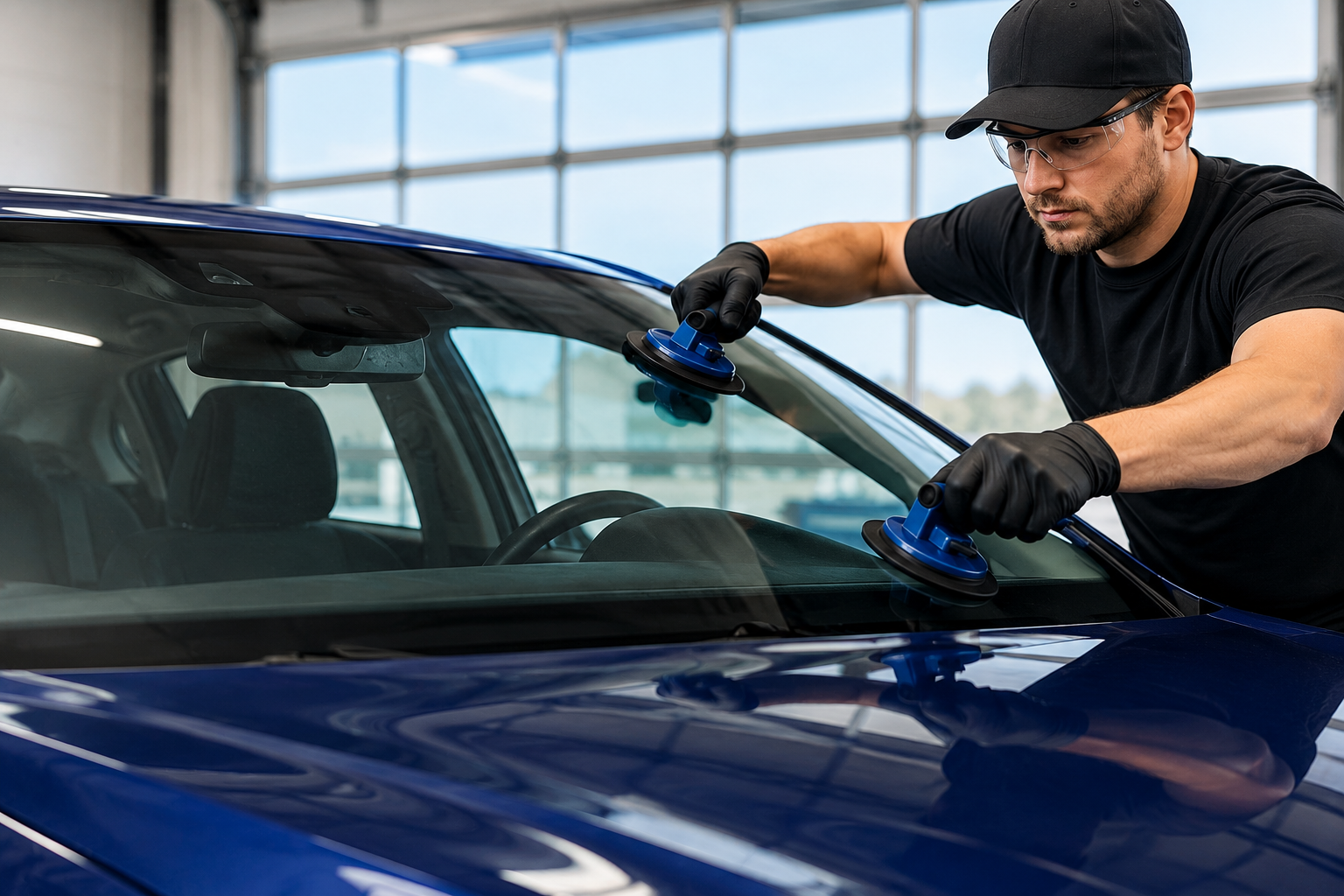
Most replacements at Blue Ribbon Auto Glass take between 60 and 90 minutes from start to finish. That window covers removal of the old glass, prep of the frame, and installation of the new windshield to manufacturer specifications.
Newer vehicles add a step. Many newer vehicles include camera-based driver-assist systems mounted to the windshield. These systems need recalibration once the new glass goes in. That recalibration adds another 30 to 60 minutes to the appointment. It’s not optional — it confirms the safety systems read the road correctly. Skipping it leaves those systems guessing, which defeats the purpose of a fresh installation.
Will Insurance Pay for the Fix?
Florida’s zero-deductible glass law often covers the entire cost of a windshield replacement for comprehensive policyholders. Drivers carrying comprehensive coverage typically pay nothing out of pocket, no deductible, no repair bill left over. That protection isn’t limited to full replacements, either.
The state’s coverage rule extends across several common damage scenarios:
- Full windshield replacement
- Windshield repair for chips and small cracks
- Damage caused by road debris
- Damage from storms or falling objects
Coverage depends heavily on policy type, though. Liability-only drivers should pause before assuming they’re protected.
Does liability-only coverage include windshield repair?
No. Liability coverage handles damage a driver causes to others, not damage to their own glass. Florida’s zero-deductible benefit applies exclusively to comprehensive policies, so a driver with liability-only insurance pays for windshield work directly. Checking policy documents before scheduling service saves confusion later.
What if a driver isn’t sure what their policy covers?
Confusion over policy language is common, and insurance paperwork rarely makes coverage details obvious. Blue Ribbon Auto Glass steps in here directly. The team helps customers set up their insurance claim from the very first call, coordinating with the insurance company to move the process along quickly.
That assistance matters most in the days right after a rock strike or storm, when a driver just wants clear answers. Comprehensive policyholders can expect a smoother path toward zero-cost replacement. Everyone else gets straightforward guidance on what to expect financially before any work begins.
What Mistakes Should You Avoid Next?
Delaying a decision tops the list of costly mistakes. A cracked windshield reduces visibility and weakens the vehicle’s structural integrity, raising the risk of accidents, especially in poor weather or at night. Waiting a few extra weeks rarely helps; it only gives the crack more time to spread.
Choosing an uncertified installer ranks as the second major error. Certified technicians ensure repairs meet safety standards and preserve the windshield’s structural integrity, something a bargain-bin operator can’t always guarantee. Cutting corners on adhesive cure time or glass quality puts everyone in the car at risk during the next collision.
Should drivers wait for a “convenient” appointment slot?
Convenience matters, but not at the expense of safety. Blue Ribbon offers both mobile and in-shop appointments across Sarasota and Manatee counties. Scheduling flexibility doesn’t require postponing the repair itself. Drivers can have a technician come to a home or workplace. Visit the shop directly, whichever fits the day better.
Does the shop’s reputation actually matter?
Reputation signals reliability. Blue Ribbon has earned recognition as Best in Florida for three consecutive years, a distinction that reflects consistent workmanship rather than a single good review. Skipping that kind of track record in favor of the cheapest quote often means gambling on fit, adhesion, and long-term durability.
Avoid these mistakes:
- Ignoring a small chip until it spreads across the driver’s line of sight
- Hiring an uncertified installer to save a few dollars
- Assuming mobile service means lower quality
- Overlooking a shop’s track record and certifications before booking
Determining whether your windshield needs repair or replacement protects both your safety and your vehicle’s structural integrity. By assessing damage size, location, and depth early, you avoid the risk of compromised visibility or weakened glass during critical moments on the road. Our certified technicians evaluate each situation with precision, applying manufacturer standards to guide the right solution for your specific circumstances. Trust expertise over guesswork—professional assessment ensures your windshield serves its essential safety function reliably.
FAQ
How do you know if your windshield needs repair or replacement?
Size, depth, and location determine the outcome. Chips smaller than a quarter with no spreading cracks qualify for repair. Larger damage, edge cracks, or chips in the driver’s line of sight require replacement.
Can you fix a windshield chip yourself before it gets worse?
Waiting turns a fixable chip into a crack that demands full replacement. A trained technician evaluates the damage against size and depth standards and settles the question in minutes.
What does the windshield repair process actually involve?
A technician injects resin directly into the chip under pressure, then cures it with UV light to bond it with the surrounding glass. Blue Ribbon Auto Glass completes qualifying repairs in 20 to 30 minutes.