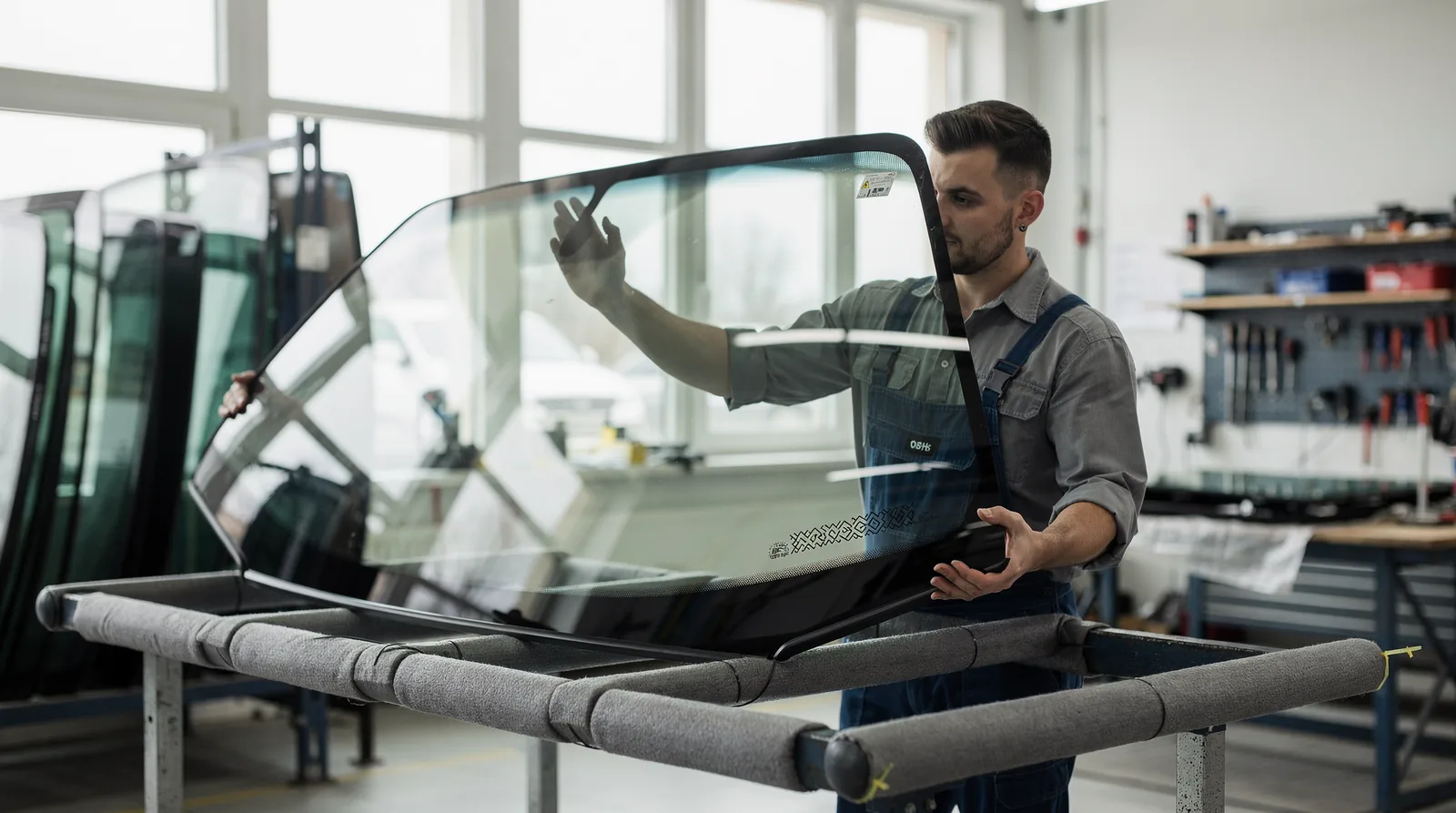
OEM windshields come from the original vehicle manufacturer or its branded supply channel, matching exact specifications for fit, thickness, and ADAS camera compatibility. Aftermarket glass, produced outside that channel, fits compatible vehicles but sometimes varies in optical clarity and sensor calibration accuracy. Blue Ribbon Auto Glass installs OEM-approved glass to manufacturer specifications for reliable, long-term safety performance.
Key Takeaways
- OEM windshields come directly from vehicle manufacturers or their official supply channels for guaranteed fit.
- Aftermarket windshields are produced by independent manufacturers outside the original branded supply channel for compatibility.
- OEM glass ensures full compatibility with advanced safety systems like lane departure warning and automatic braking.
- Aftermarket options typically cost less while meeting safety standards for vehicles in Sarasota, Florida.
What’s the Real Difference Between OEM and Aftermarket?
Glass origin marks the real dividing line between these two options. Original equipment manufacturer glass, known as OEM, comes through the vehicle manufacturer or its official branded supply channel, according to United AutoGlass. Aftermarket glass takes a different path entirely, manufactured outside that branded channel by companies producing compatible applications for a given make and model.
Both categories can fit a vehicle correctly, but the supply chain behind each is distinct. That distinction matters to Sarasota and Manatee County drivers comparing quotes, since sourcing affects consistency and traceability. Understanding where the glass originates helps explain why technicians ask detailed questions about a customer’s vehicle before recommending a repair path.
Does the type of glass affect fit and safety?
Matching the correct glass to a specific vehicle protects both visibility and structural performance. Blue Ribbon Auto Glass installs only the glass correctly matched to each customer’s automobile, whether the job calls for windshield repair or full windshield replacement. Skipping that matching step risks sensor misalignment, poor sealing, or long-term durability problems.
Where can Sarasota drivers get OEM or aftermarket glass installed correctly?
Local sourcing and installation expertise both matter for a proper fit. Blue Ribbon Auto Glass operates as a mobile. In-shop provider based in Sarasota, Florida, serving drivers throughout the surrounding counties.
Comparison at a glance:
| Factor | OEM Glass | Aftermarket Glass |
|---|---|---|
| Source | Vehicle manufacturer’s branded channel | Independent manufacturers outside that channel |
| Availability | Tied to dealership supply lines | Broader, competitive supply base |
| Vehicle matching | Built to original specification | Built for compatible applications |
Choosing between them starts with confirming the exact glass specification a vehicle requires, not guesswork.
Why Does OEM Glass Cost More?
OEM glass typically costs more due to its manufacturing process and adherence to factory specifications. OEM stands for Original Equipment Manufacturer, meaning the glass comes from suppliers contracted directly by the vehicle’s brand to build components matching the original part precisely. That direct manufacturer relationship, not marketing alone, drives the premium price tag.
Industry sources treat OEM glass as the “official” choice among vehicle owners weighing replacement options. It consistently costs more than aftermarket alternatives. The price difference reflects tighter sourcing controls and a closer match to what left the factory on day one. For Sarasota and Manatee County drivers comparing quotes, understanding this distinction matters before committing to any windshield replacement.
Is OEM Glass Worth the Extra Cost?
For many vehicle owners, yes. Especially those with newer models featuring advanced driver-assistance systems tied to windshield-mounted cameras and sensors. Exact-spec glass reduces guesswork around fit and calibration. Drivers weighing cost against long-term reliability often find the investment worthwhile.
Cost alone shouldn’t drive the decision, though. Installation quality matters just as much as the glass itself. Blue Ribbon Auto Glass employs certified technicians devoted to integrity. Customer safety on every job, whether the work involves a simple windshield repair or a full replacement using OEM materials.
That standard of care is why auto dealers, insurance agents, mechanics, and drivers across the region have trusted Blue Ribbon Auto Glass for more than a decade. Choosing the right glass type starts a safe repair — choosing the right installer finishes it. Vehicle owners deserve both.
Can Aftermarket Glass Match OEM Safety Standards?
Quality aftermarket glass matches original equipment safety standards when it carries Original Equipment Equivalent (OEE) certification. Meets exact fitment specifications for the vehicle. Sarasota and Manatee County drivers face real safety stakes when a shop skips these standards, since mismatched glass compromises structural integrity and driver-assist performance. Skilled windshield replacement work depends on matching, not guessing.
What Does OEE Mean for Glass Quality?
OEE glass comes from manufacturers connected to the same supply lines that produce factory-original glass, even though the term isn’t formally standardized across the industry. That connection matters because the glass shares production methods. Material quality with what left the factory, unlike generic low-cost substitutes.
Why Does ADAS Calibration Matter for Replacement Glass?
Modern vehicles rely on cameras mounted behind the windshield for lane-keeping, automatic braking, and collision warnings. Replacement glass must support the correct camera bracket and calibration procedure, or those systems misread the road. A shop performing careful windshield repair or full replacement checks bracket compatibility before installation, not after.
Beyond ADAS, several built-in features must match the original vehicle configuration exactly:
- Rain sensors
- Heated glass elements
- Acoustic interlayers for noise reduction
- Embedded antennas
- Head-up display compatibility
Missing any one of these specifications leaves drivers with a windshield that fits the frame but fails the vehicle’s actual technology.
Technicians at Blue Ribbon Auto Glass bring a combined 40-plus years of hands-on installation experience to verifying these details on every job. That depth of experience separates a glass swap from a properly restored safety system, giving Sarasota and Manatee County drivers confidence long after the installation is complete.
Does Insurance Cover the Glass You Choose?
Comprehensive coverage often pays for windshield replacement with no cost to the vehicle owner in Florida. Drivers carrying this coverage typically see the full expense of a replacement absorbed by their policy. That protection stems from Florida’s zero-deductible rule for auto glass claims.
The rule itself is straightforward. Qualifying windshield claims carry no deductible and no out-of-pocket expense for the policyholder. Vehicle owners in Sarasota and Manatee Counties who carry comprehensive coverage often qualify without realizing it.
Does Filing a Glass Claim Raise Insurance Rates?
Concerns about premium increases keep many drivers from filing legitimate glass claims. Florida’s zero-deductible provision exists specifically to remove cost as a barrier to timely, safe repairs. Skipping a covered claim only delays a fix that protects both visibility and structural integrity.
What Happens After Filing a Claim?
Paperwork and insurance-company procedures intimidate many policyholders, and that hesitation causes delays that let minor chips spread into full cracks. Blue Ribbon Auto Glass helps customers set up the claim directly with their insurance provider, streamlining the process. Replacement happens as quickly as possible.
Coverage details still vary by policy, so confirming comprehensive status before scheduling service matters. A quick call to an insurance agent settles the question in minutes.
| Coverage Type | Typical Cost to Driver | Deductible Applies? |
|---|---|---|
| Comprehensive (Florida) | Often pricing varies | No |
| No comprehensive coverage | Full replacement cost | N/A |
Understanding this distinction shapes whether windshield replacement feels like a financial burden or a routine, covered service. Pairing that knowledge with proper windshield repair guidance keeps both safety and cost in check for drivers throughout the region.
How Do You Choose Repair vs Replacement?
Damage size and location determine the answer. Small chips often qualify for quick windshield repair. Large cracks or damage near the edge usually call for full windshield replacement.The distinction matters because a compromised windshield does more than look bad.
A cracked windshield weakens the vehicle’s overall structure. Visibility drops too, and both problems raise accident risk substantially during nighttime driving or storms. Waiting on a decision only extends that exposure.
Can a small chip really wait, or does it need immediate attention?
Small chips often qualify for prompt repair without disrupting a driver’s schedule. Left alone, however, temperature swings and road vibration can spread that chip into a full crack. Addressing damage early keeps repair on the table instead of forcing a costlier replacement later.
What if the crack reaches the edge of the glass?
Edge damage changes the calculation entirely. Cracks that reach the windshield’s perimeter compromise structural support, so replacement becomes the safer, often the only, option.
A quick way to frame the decision:
| Damage Type | Typical Recommendation |
|---|---|
| Small chip, away from edge | Repair |
| Large crack or edge damage | Replacement |
Certified technicians play a central role in getting this call right. Their training ensures repairs meet recognized safety standards while preserving the glass’s structural integrity. Not just patching a chip cosmetically. That expertise, paired with Blue Ribbon Auto Glass being voted Best in Florida for 2025, gives Sarasota and Manatee County drivers confidence that whichever path fits their windshield, the work gets done to standard. Skipping a proper evaluation risks driving on glass that looks fine but no longer performs its safety role.
FAQ
What’s the main difference between OEM and aftermarket windshields?
OEM windshields come from the vehicle manufacturer or its branded supply channel, matching exact fit and ADAS specifications. Aftermarket glass comes from independent manufacturers producing compatible applications outside that channel.
Does aftermarket glass compromise safety?
Aftermarket glass meets safety standards for vehicles in Sarasota, Florida. It sometimes varies in optical clarity and sensor calibration accuracy. Blue Ribbon Auto Glass matches the correct glass to each vehicle to protect visibility and structural performance.
Where do Sarasota drivers get OEM or aftermarket glass installed?
Blue Ribbon Auto Glass, based in Sarasota, Florida, installs OEM-approved glass through both mobile and in-shop service. The company serves drivers throughout the surrounding counties.