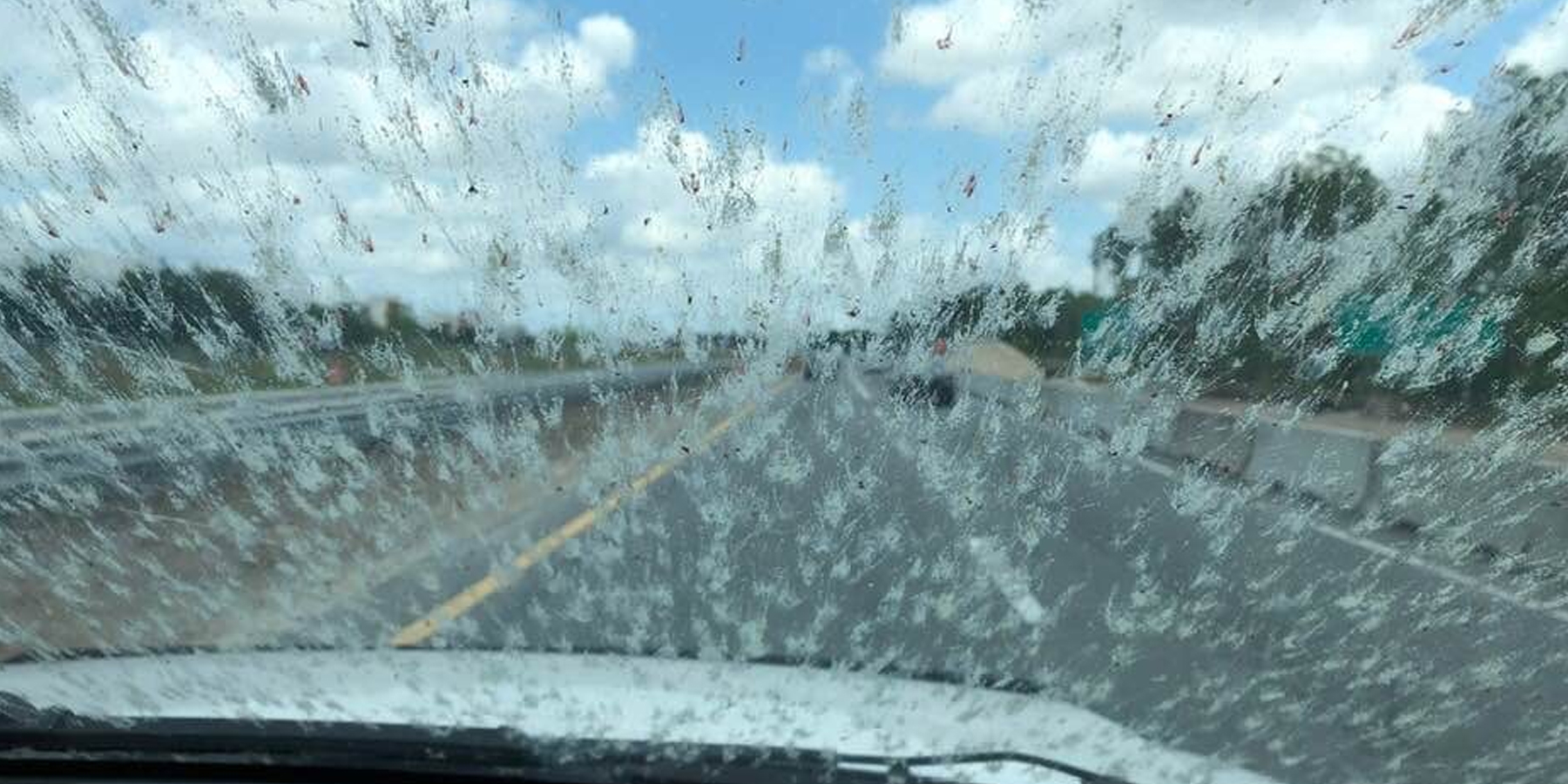
If you’ve driven in Southwest Florida for more than a spring, you know the feeling: a freshly washed car, a clear morning, and then: splat. Lovebugs. By the dozens. By the hundreds. All over your windshield.
It’s one of those only-in-Florida experiences that locals accept as part of life from April through May. But while the bugs themselves are harmless, what they leave behind on your glass is a different story. Here’s what Sarasota and Manatee County drivers need to know about lovebugs, windshield damage, and how to stay ahead of it this season.
Why Lovebugs Are Hard on Your Windshield
Lovebugs might seem like a nuisance, but their remains are mildly acidic. When they splatter on your windshield and sit in the Florida heat, the proteins in their bodies begin to break down and etch into your glass and paint. Left too long, even just a few days in peak summer sun, lovebug residue can cause micro-damage to the surface of your windshield, reduce clarity, and compromise the effectiveness of your windshield wipers.
The acidity also degrades wiper blade rubber faster than normal. If you’ve noticed your wipers smearing instead of clearing after lovebug season, that’s often why.
When Lovebug Season Happens in Sarasota
There are two lovebug seasons in Florida each year: mid-April through May, and late August through September. The spring season tends to be the more intense of the two, particularly along I-75 and US-41 corridors through Sarasota and Manatee Counties. If you’re commuting or driving long stretches during these weeks, expect to see significant accumulation on your windshield.
Cleaning Tips That Won’t Damage Your Glass
The key to dealing with lovebugs is speed: the sooner you clean them off, the easier the job. Here are a few methods that work well without scratching your glass:
- Wet and wait: Soak a microfiber cloth or soft sponge in warm water and lay it across the affected area for a few minutes before wiping. This softens the residue and prevents scratching.
- Bug and tar remover: Products specifically designed for bug removal work well on glass. Spray, let sit 30 seconds, then wipe gently.
- Baby oil: A small amount on a soft cloth can dissolve bug residue effectively. Just rinse thoroughly afterward to avoid wiper streaking.
- Avoid dry wiping: Never try to wipe dry lovebug residue off glass. The exoskeleton fragments act like sandpaper and can leave fine scratches.
When a Chip Becomes a Problem During Bug Season
Here’s the thing lovebug season tends to reveal: existing chips and cracks you’ve been ignoring. The combination of highway driving, increased debris, and temperature fluctuations common in April and May can cause small chips to spread rapidly.
A chip smaller than a quarter can typically be repaired quickly and inexpensively. Under Florida’s no-deductible windshield law, most drivers with comprehensive insurance pay nothing out of pocket. But once a chip becomes a crack longer than about six inches, repair is often no longer an option and full replacement becomes necessary.
Don’t wait for lovebug season to turn a small chip into a full windshield replacement. If you’re seeing a chip or crack right now, this is the time to address it.
We Come to You — No Shop Visit Needed
At Blue Ribbon Auto Glass, we offer mobile service throughout Sarasota and Manatee Counties. We come to your home, office, or wherever your car is parked, complete the repair or replacement, and have you back on the road, without you ever having to rearrange your day.
Most repairs take under an hour. Most replacements take under two. And if you have comprehensive insurance, there’s a strong chance you’ll pay nothing at all.
Got a chip or crack that’s been sitting too long? Request a free quote today and we’ll take care of it before lovebug season makes it worse.